Start with what students should learn
A strong science day begins with one specific question: what should students observe, test, compare or explain by the end? This goal helps the team choose age-appropriate activities and prevents the day from becoming a collection of unrelated effects.
The goal can remain simple. Younger students may compare how materials behave, while older groups can control one variable or defend an explanation with evidence.
Run a practical diagnosis
Before building the programme, gather the school’s real conditions. This early conversation reduces last-minute changes and helps adapt language, materials and pace.
- Student numbers, ages and participating classes.
- Available time and possible rotation pattern.
- Rooms, courtyard, water, electricity and accessibility.
- Teachers and adults available at each station.
- Existing resources, sensory needs and material budget.
Choose a format that holds attention
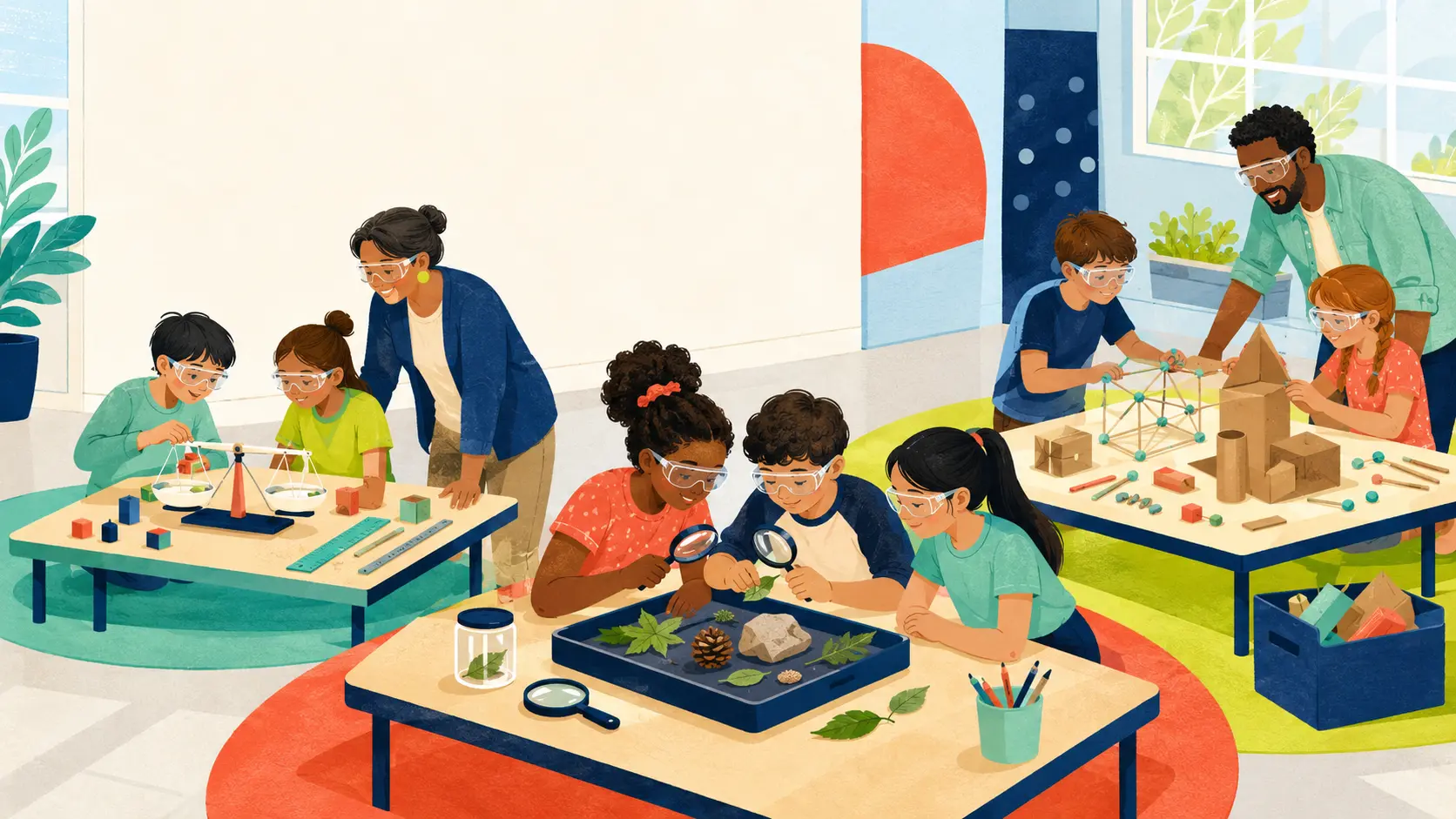
Stations are often easier to manage than a long demonstration. Each needs one central action, a visible question and an outcome that can be observed within a short period.
For groups needing more support, reduce the number of steps and assign roles such as handling materials, observing, recording and explaining.
- A 10–15 minute shared opening.
- Stations of roughly 15–25 minutes.
- Short reset periods between rotations.
- A 15-minute shared closing conversation.
Plan safety, setup and responsibilities
These are the main elements to consider when preparing each station:
- Materials and quantities used in the activity.
- Foreseeable risks and preventive measures.
- Required personal protective equipment.
- Cleaning, waste disposal or storage procedures.
- The adult responsible for supervising the station.
- Clear restrictions: avoid unknown mixtures, sealed gas-producing reactions and anything that could be mistaken for food.
Prepare the space
Plan circulation, stable tables, protected floors, handwashing and separation from food. Test the exact quantities beforehand to estimate timing and identify problems before students arrive.
Evaluate without turning the day into a test
Students can finish a station with a sentence such as ‘we observed…’, draw a result or suggest one variable to change.
A checklist can record simple, observable criteria for each student or group. It can be paired with process assessment that considers participation, hypotheses, safety, evidence, collaboration and changes of mind during the experience.
This evidence is not meant to grade the moment of surprise. It supports feedback, future planning and connections with later lessons.
- Participates and handles or observes materials safely.
- Understands and follows the station instructions.
- Records an observation or evidence from the result.
- Explains what happened using observations.
- Collaborates and respects agreed roles.
- Suggests a question, improvement or new trial.
A final checklist
Confirm the programme, people, materials and room plan one week before the event. Prepare labelled boxes and spares the day before, then record inventory and team observations afterwards.
Boom! Lab can adapt this structure to one workshop, a STEM day or a multi-session programme, always starting from the school’s context.